
Foundation Raising
Foundation raising corrects settled or unlevel structures by lifting them back to grade - often needed when footing failures have caused movement.
Learn more →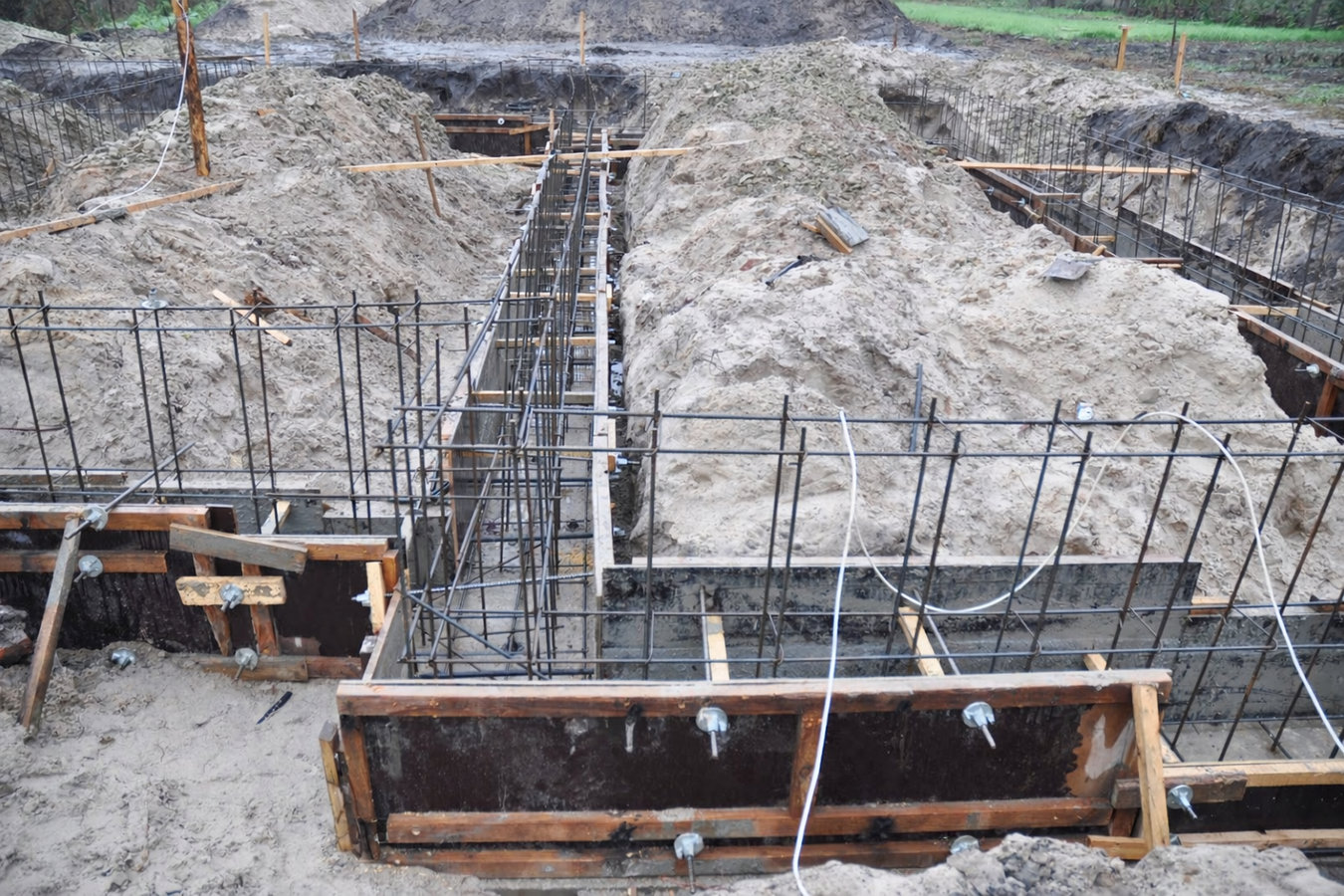
Adding a room, a garage, or a patio cover? The footing is what keeps it level and stable for decades. We pour concrete footings in Jurupa Valley built for local clay soils, seismic requirements, and city inspections.
Concrete footings in Jurupa Valley carry the weight of a structure - a room addition, a patio cover, a garage, or a retaining wall - down into stable ground so the structure above stays level and does not shift. Most residential footing jobs take one to three days on-site, though the full timeline from first call to pour includes permit review, which adds time.
A lot of Jurupa Valley homeowners come to us when they are adding onto their home and the permit process reveals that a footing is required before framing can begin. Others discover during a home purchase or refinance that an older addition was built without footings - and the city requires it to be corrected. Either way, concrete footings are the part of the job that nobody sees once it is done, but every door that opens smoothly and every wall that stays crack-free depends on getting it right.
If you are adding a full structure to your property, you may also need our foundation installation service - footings and foundations are related but different scopes, and we can walk you through which one your project calls for.
Cracks that angle out from the corners of doors or windows - especially if those doors or windows have started sticking - suggest the structure below is shifting. In Jurupa Valley, this is often connected to clay-heavy soils that expand and contract with seasonal moisture changes, gradually pushing the structure out of alignment. The longer you wait, the more the framing moves.
A floor that slopes noticeably toward one side, or where you can feel an obvious dip or rise underfoot, suggests the structure below is settling unevenly. This kind of movement often traces back to footings that were undersized, placed in unstable soil, or never installed under an older addition.
If you are adding a patio cover, a room addition, a detached garage, or a large retaining wall, you need footings before anything goes up. Many Jurupa Valley homeowners discover during the permit process that a previous owner built a structure without proper footings - and the city requires it to be corrected before new work is approved.
If you can see a gap opening up between the bottom of your exterior walls and the slab or soil below, the footing beneath that section may be failing. This is especially worth watching after a wet winter followed by a dry summer - the soil shrinkage cycle common in the Inland Empire can pull footings downward or sideways over time.
We handle footing work for room additions, patio covers, detached garages, retaining walls, fences, and new structures of all kinds. Every footing we install includes the correct steel reinforcement for the load it will carry and the seismic zone requirements that apply in Southern California. The steel is not a nice-to-have here - California building code requires it, and a city inspector will check the placement before any concrete is poured. Homeowners who are building an entirely new structure also ask about our foundation raising service, which is often needed when existing footings have allowed a structure to settle over time.
For every permitted footing job, we handle the application with the City of Jurupa Valley, coordinate the pre-pour inspection, and keep you informed throughout. The Jurupa Valley Community Development Department handles these permits locally, and our crew knows exactly what is required for the inspection to pass on the first visit. The American Concrete Institute publishes the standards that govern proper footing concrete - mix quality, curing time, and reinforcement - and those are the standards we follow.
Used under load-bearing walls and most room additions - a long trench footing that distributes weight across its entire length.
Best for deck posts, column bases, and point loads where a single pad carries a concentrated weight rather than a continuous wall.
Combines a footing and a short wall above grade - used when the floor framing needs to sit above the surrounding soil level.
For properties with existing unpermitted structures - we assess what is already in the ground and recommend what is needed to meet current standards.
Jurupa Valley sits on alluvial soils deposited by the Santa Ana River over thousands of years, and some areas have clay layers that swell when wet and shrink when dry. That cycle happens every year, and it puts steady stress on footings that were not sized for the soil on your specific lot. Add Southern California's seismic hazard classification - Jurupa Valley is in a high seismic zone - and you have two local conditions that together make footing design here more demanding than in most parts of the country. A contractor who does not ask about your soil or your project's structural loads before quoting is cutting a corner that will show up in your structure later.
We work throughout Jurupa Valley and the broader Inland Empire, including Riverside and Corona. Jurupa Valley's rapid growth since incorporating in 2011 means the permit office stays busy, and contractor schedules fill up quickly - especially in spring, when most homeowners want to start construction. If your project has a deadline, booking early is worth doing. The California Geological Survey maps the seismic hazard zones across the state, and our footing designs are built to meet the requirements for this area specifically.
We visit your property, look at the area where the footing will go, and assess the ground before giving you a price. Footing costs depend heavily on how deep the work needs to go and what the soil looks like - anyone quoting you over the phone without a site visit is guessing.
If your project requires a permit - which it almost certainly does - we apply with the City of Jurupa Valley after you approve the estimate. Plan review can take a few days to a few weeks depending on project complexity. We give you a realistic timeline based on our experience with the local permit office and keep you updated throughout.
On the day of work, the crew digs the trench to the approved depth and places steel reinforcing rods at the correct spacing and height. Before any concrete is poured, a city inspector visits to verify the trench dimensions and steel placement match the approved plans - this inspection is what protects you.
Once the inspection passes, concrete is poured and finished. In Jurupa Valley's hot summers, the crew schedules pours for early morning and takes steps to slow surface drying. The concrete needs at least seven days before framing or significant loads are placed on it - we tell you exactly when it is safe to proceed.
Free on-site estimate, written scope before you commit. Permits and inspections handled. Replies within one business day.
(951) 393-1148Jurupa Valley's soils vary from one part of the city to another - some lots have stable sandy layers, others have clay-heavy ground that swells with every rain. We assess your specific site before quoting because a footing sized for the wrong soil is a footing that fails. That site visit is free and takes about 20 minutes.
We apply for the building permit with the City of Jurupa Valley, coordinate the pre-pour inspection, and provide you with the permit documentation when the job is done. A footing that has been inspected and passed gives you a clean paper trail - important for refinancing, selling, or adding to your home again in the future.
Southern California sits in one of the most seismically active regions in the country, and Jurupa Valley is classified as a high seismic hazard area. Every footing we pour includes steel reinforcement sized for the load above and the ground movement risks below - not the minimum required, but enough to protect your structure through whatever the region delivers.
California requires a valid license through the Contractors State License Board for any paid concrete work. Our license is current and verifiable on the CSLB website - it confirms we are legally authorized to work on your property and carry the required insurance coverage.
Every footing project starts with a written estimate that covers excavation, steel, concrete, and permits - no cost surprises once the crew is already on your property.
Foundation raising corrects settled or unlevel structures by lifting them back to grade - often needed when footing failures have caused movement.
Learn more →Full foundation installation for new structures, additions, and ADUs - built to Jurupa Valley seismic and soil requirements.
Learn more →The permit office and contractor schedules fill up fast - locking in your start date now keeps your project on track.