Foundation Installation
Full foundation installation for new homes, additions, and ADUs - permitted and inspected through the city.
Learn more →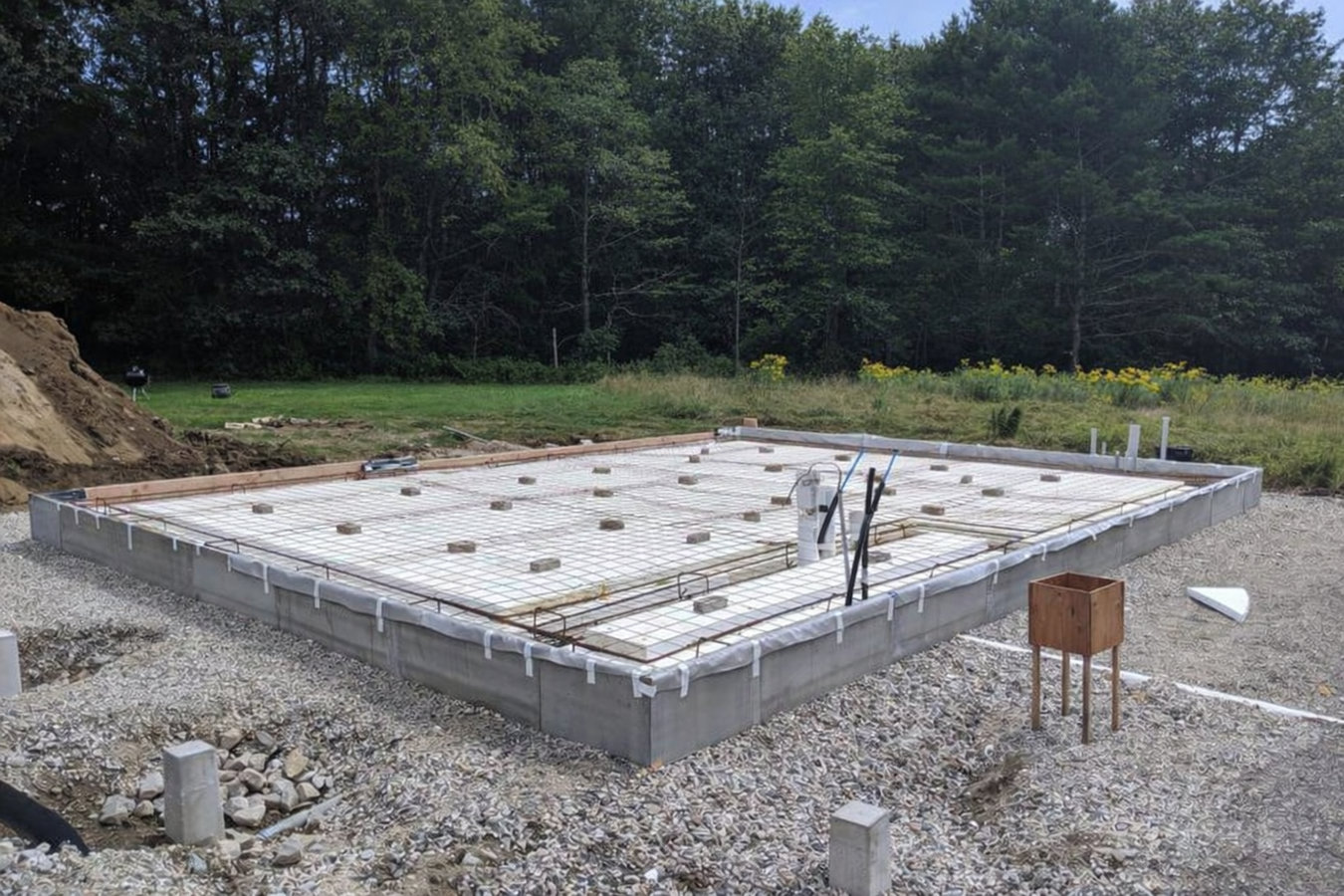
Starting from bare ground or replacing a failing base? We build concrete slab foundations in Jurupa Valley that are prepared for clay soils, seismic requirements, and Inland Empire heat.
Slab foundation building in Jurupa Valley means grading the ground, compacting the soil, placing steel reinforcement, and pouring a thick concrete base designed to carry your home - most residential projects take one to two weeks on-site once the permit is approved, with a 28-day curing period before framing can start.
A slab foundation is the starting point for almost every new home, addition, and accessory dwelling unit built in Jurupa Valley today. It is also the most consequential concrete pour your property will ever see - the work done underground before the concrete goes in determines whether your slab holds level for decades or starts cracking within a few years.
If you are also planning above-ground concrete work once the slab is complete, our foundation installation service covers the full scope from permit to final inspection.
Small surface cracks in concrete are normal. Cracks that are wider than a credit card is thick - or that run diagonally from the corners of doorways - can signal that the slab is moving or settling unevenly. In Jurupa Valley, clay-heavy soils cause this kind of movement regularly, especially after a wet winter followed by a dry summer. If you are seeing this pattern, it is worth having a professional assess it before the problem grows.
When a slab shifts, the walls above it shift too - and one of the first things homeowners notice is that interior doors start sticking or gaps appear around window frames. This is especially common in older Jurupa Valley homes where the original slab may not have been built to current standards. If this is happening in multiple rooms at once, the foundation deserves a closer look.
Damp floors, water stains on floor coverings, or a musty smell near the ground can mean the moisture barrier under your slab has failed or was never properly installed. This is a real concern in parts of Jurupa Valley closer to the Santa Ana River, where groundwater levels can be higher. Left unaddressed, moisture rising through a slab can damage flooring, encourage mold growth, and affect indoor air quality.
If you are adding a home, a room addition, a garage, or an accessory dwelling unit to a Jurupa Valley property, you need a slab foundation before any walls go up. Jurupa Valley has seen a significant increase in ADU construction, and a proper foundation poured to current California standards is required to pass city inspection. This is not a sign of trouble - it is simply the right starting point.
Every slab foundation we build starts with the ground, not the concrete. We grade and compact the soil, lay a gravel base where drainage conditions call for it, and install a plastic moisture barrier before any steel or concrete is placed. Inside the forms, we set a rebar grid sized to the load and the local seismic requirements - then we schedule the pour for early morning during hot months so the surface does not dry faster than it can cure.
We handle residential slabs for new homes, garage additions, room additions, and ADUs - along with concrete footings for detached structures and fences. Every project goes through the Riverside County permit and inspection process, which means a county inspector signs off on the steel placement before the pour and on the finished slab before framing begins. You get documentation proving the work was done right - not just our word for it.
The standard starting point for residential construction in Jurupa Valley - built to current California seismic and moisture requirements.
A good fit for homeowners adding a detached garage, workshop, or bonus room to their existing property.
Purpose-built for accessory dwelling units, which have specific requirements under California and local Jurupa Valley building rules.
When an existing garage floor was not poured to residential living standards, we assess whether a new slab or reinforcement is needed before conversion begins.
Jurupa Valley was incorporated in 2011 and sits in one of the more seismically active parts of Southern California. The ground in many neighborhoods - particularly near the Santa Ana River corridor and older communities like Rubidoux and Glen Avon - contains clay-heavy soils that expand and contract with seasonal moisture changes. A slab poured on top of that soil without proper preparation will start showing cracks within years, not decades. Contractors who work in this area know the difference, and the ones who do not cut corners on base work are the ones worth calling. According to the California Geological Survey, Jurupa Valley falls within designated seismic hazard zones that require specific foundation reinforcement under state building law.
We build slab foundations throughout the Jurupa Valley area, including in Riverside and Moreno Valley. Permitting in Jurupa Valley goes through Riverside County Building and Safety - a process we know well. We submit the application, coordinate inspections, and keep you updated at every step so nothing stalls your project waiting on paperwork.
We respond within 1 business day. We do not quote foundation projects over the phone - every project needs an on-site look first so you get an accurate number.
We visit your property, evaluate the soil and grade, review the scope, and give you a written estimate breaking out site prep, materials, permits, and labor. No surprises at the end.
We submit the permit application to Riverside County Building and Safety and handle the plan review process. Approval typically takes one to three weeks - we factor this into your project schedule from day one.
Once the permit is approved, we prep the site, set the steel, pass the pre-pour county inspection, pour the slab, and manage curing. A final county inspection closes the permit - giving you a clean, documented record.
Free on-site estimate. Written quote before any work begins. We handle the Riverside County permit from start to finish.
(951) 393-1148Jurupa Valley sits on expansive clay soils that shift with every wet and dry season. Before any concrete goes in, we evaluate the ground conditions and build the base to match what we find - not a one-size-fits-all spec. That is the single most important thing separating a slab that holds level for 40 years from one that cracks in five.
Foundation permits in Jurupa Valley go through Riverside County Building and Safety - a process that includes plan review, a pre-pour inspection, and a final inspection. We submit the application, coordinate every inspection, and keep you updated throughout. When the project is done, you have a fully documented record - which matters when you sell the home or need to pull future permits.
Jurupa Valley summers regularly hit triple digits, and fresh concrete that dries too fast on the surface ends up weaker and prone to cracking before the slab has even cured. We schedule pours for early morning during hot months and keep the surface protected throughout the curing period. A slab poured in August by our crew performs the same as one poured in March.
Jurupa Valley sits within a seismically active region, and California requires specific steel reinforcement patterns and footing depths for foundations here. Every slab we build meets those requirements - and the pre-pour county inspection confirms it before the concrete goes in. You can verify our license status at any time on the California Contractors State License Board website.
Every project starts with a written estimate and ends with a county-inspected, fully documented slab. No verbal promises, no paperwork gaps.
Full foundation installation for new homes, additions, and ADUs - permitted and inspected through the city.
Learn more →Properly sized and reinforced footings that anchor your structure to stable ground below the clay layer.
Learn more →Spring and fall booking windows fill fast - reach out now to lock in your start date before the next permit backlog hits.